

Keith Lawton – Sector Director, Marine Infrastructure Services – APEM Group
30/03/2026 | Grid
Why smarter data not bigger budgets will deliver the UK's future grid
The UK is entering the most significant period of grid buildout in its history.
Electrification of heat, transport and industry is driving unprecedented demand, while offshore wind and other renewables continue to scale. At the same time, developers and transmission owners are under pressure to deliver new infrastructure faster and more cost effectively, whilst maintaining stakeholder buy-in.
What sits at the centre of all the key challenges that they are facing — cost, acceptance and speed — is not the engineering challenge itself, but the quality of the evidence that underpins efficient decisions.
Early, high- resolution environmental and technical intelligence is becoming the most powerful lever the sector has to control costs, reduce risk and build confidence in the transition ahead.
Ahead of RenewableUK's Flexibility & Grid 2026, which APEM is proud to be sponsoring and I will be attending, this article sheds light on how better data can help make better decisions on grid infrastructure and connections ahead of time, helping to smooth the transition to a cleaner energy system.
Flexibility & Grid
The real cost drivers: delays, uncertainty and rework
Much of the cost escalation seen in linear infrastructure projects is not caused by major engineering design decisions, but late changes resulting from the accumulated impact of uncertainty:
- Late discoveries of environmental constraints that force redesign
- Incomplete understanding of landfall, coastal or landowner issues, including refused permission to access land
- Interface risks between offshore and onshore elements
- Unanticipated shipping and navigation constraints that require route changes, additional protection measures, or further regulatory scrutiny
- Late stakeholder objections due to lack of data or engagement
- Consent delays caused by insufficient evidence or unclear alternatives
- Legal challenges resulting from decisions that cannot be justified transparently.
These issues lead to rework; one of the most expensive and least visible cost drivers in the system.
When early intelligence is lacking, options remain vague for too long. In major grid, cable and interconnector programmes, the lack of clarity in the early months of planning can lead to a cascade of redesigns across environmental assessment, engineering design, stakeholder engagement and construction planning.
Why early intelligence is a cost-saving tool
High quality data gathered early on is no longer a ‘nice to have’. It is a critical enabler of cost-effective grid delivery.
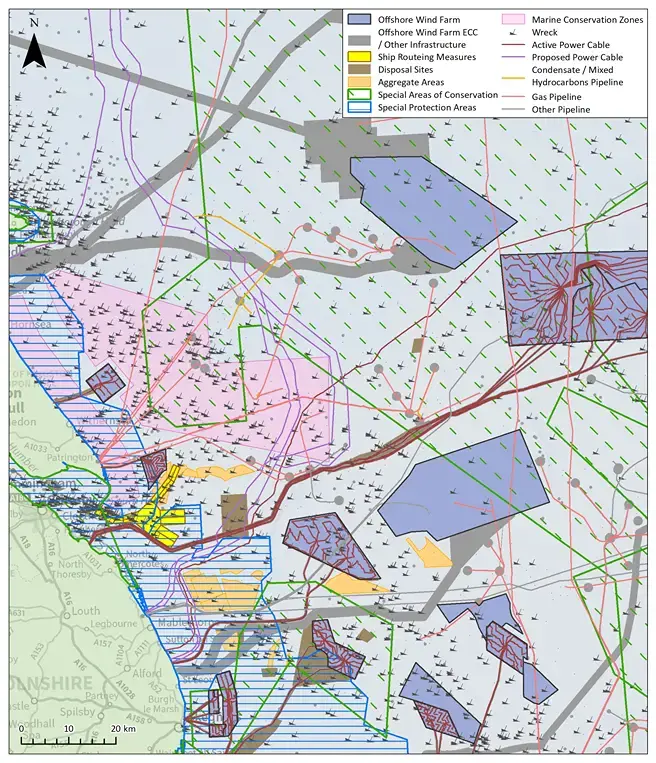
In large linear projects, with no fixed corridor at the outset, and dozens of potential route permutations, early environmental impact assessment (EIA) becomes difficult. An industry example can be seen in the Carolina Long Bay offshore wind development2, where export cable routeing proved highly challenging due to a wide area of overlapping environmental, coastal and maritime constraints, including protected species, reefs, shipping routes and fishing activity; all of which made early-stage EIA and route optimisation complex. But this is now changing.
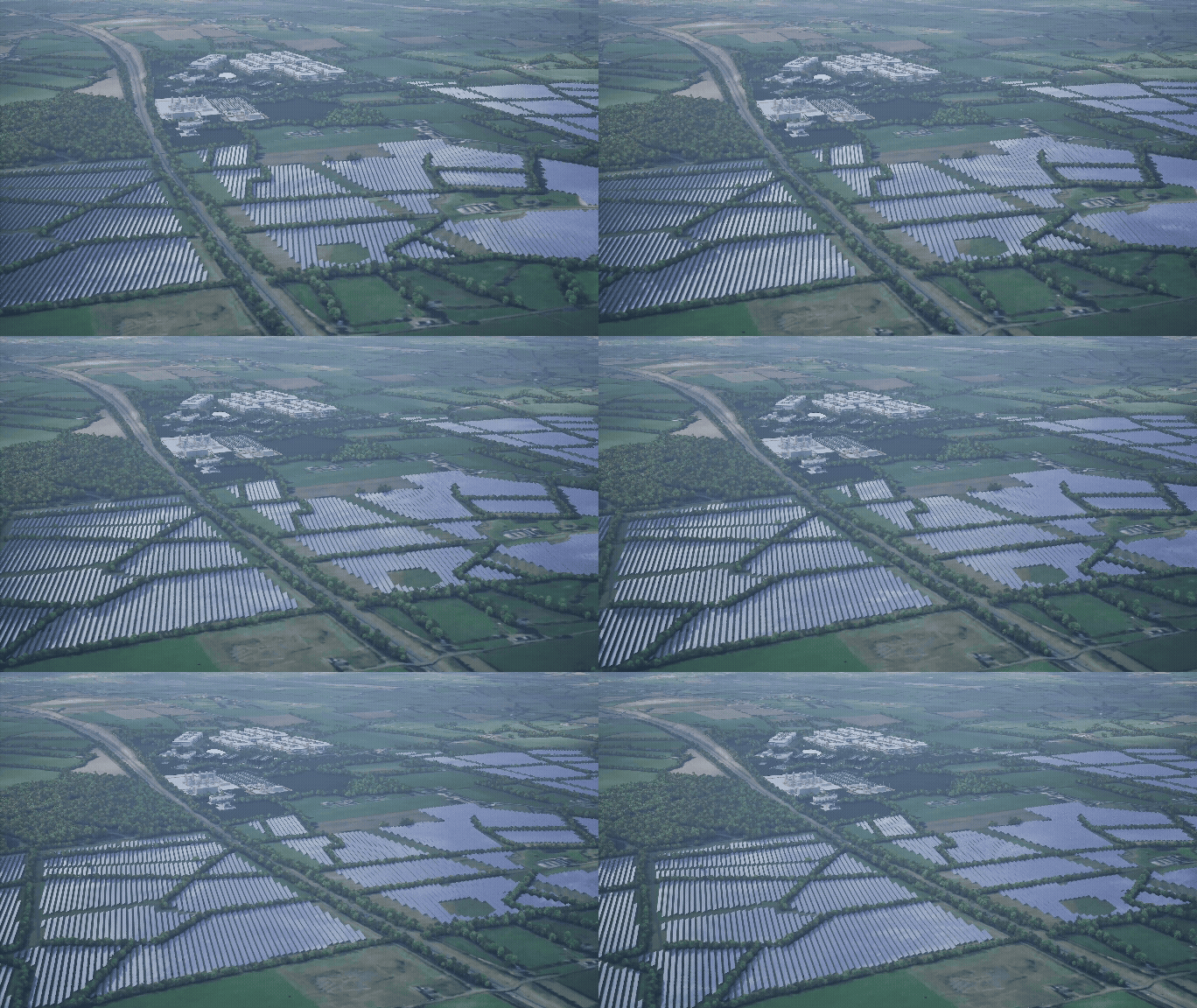
Developers and transmission owners are increasingly turning to ultra high-resolution aerial imagery, light detection and ranging (LiDAR) and other remotely sensed datasets to gain early clarity across wide geographic areas. These datasets provide detailed topographic, land use and environmental constraints information, allow multiple route options to be assessed rapidly and consistently, remove dependency on early land access, and enable the identification of potential fatal flaws long before they become costly blockers.
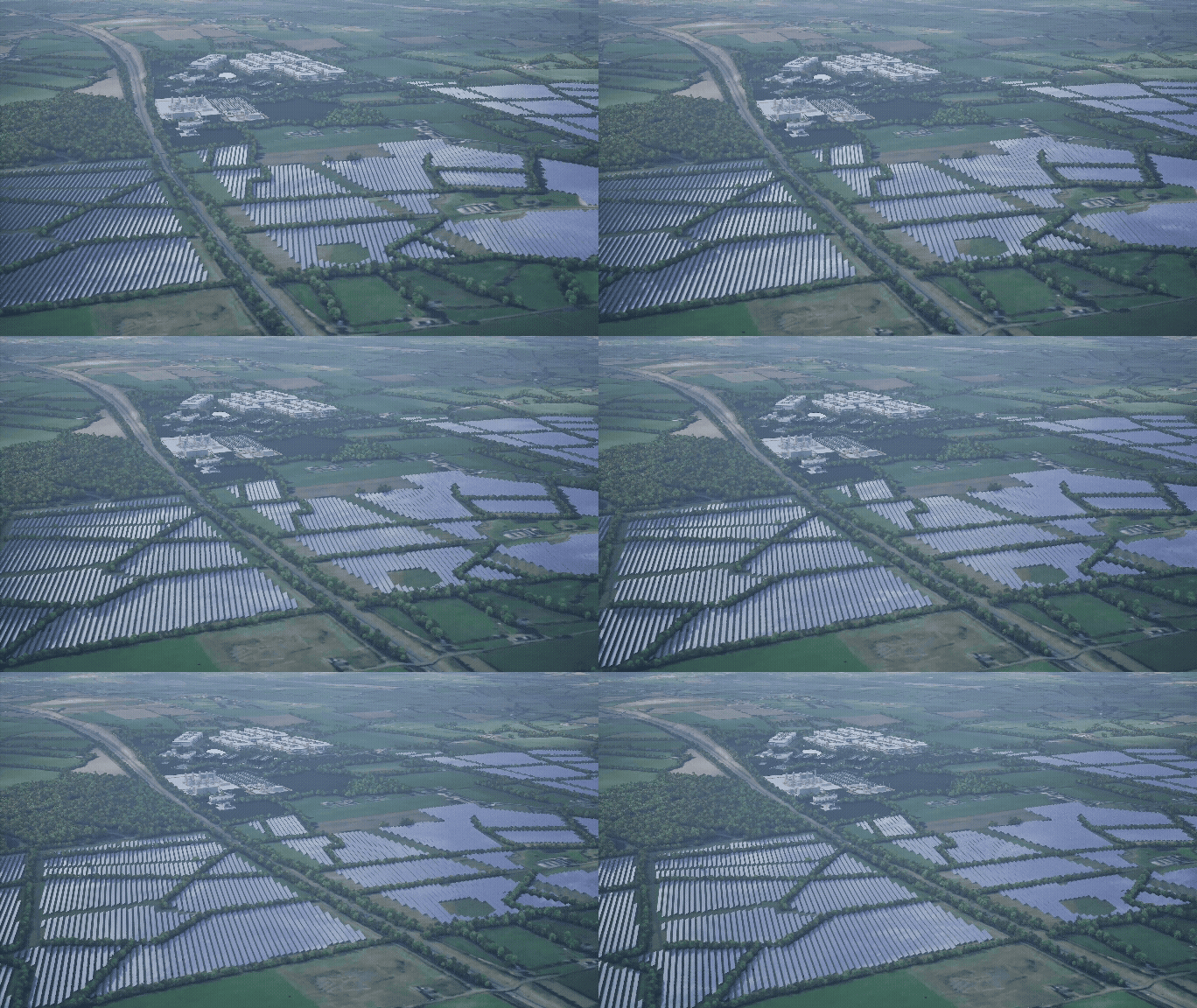
Reality 3D model of a development site created from aerial imaging and LiDAR datasets
Alongside these terrestrial environmental datasets, navigation and shipping intelligence plays an equally important role in early offshore planning, particularly for export cables and interconnectors. By incorporating high‑resolution vessel traffic modelling and automated coastal data acquisition surveys into robust navigation risk assessments at the outset, project teams can identify conflicts with shipping lanes, anchoring or refuge areas, pilotage and recreational or fishing activity early and with confidence. This intelligence informs everything from early planning and stakeholder engagement to robust cable burial risk assessments, well before any issues can escalate into major cost or schedule risks.
This integrated approach to early data, from environmental constraints to navigation pressures, supports the refinement of viable route corridors, informs appropriate protection measures, and strengthens the defensibility of decisions, ultimately enabling smoother progression through consenting, engineering and delivery stages.
While some organisations are now turning to AI driven routing and site selection tools, the real differentiator is not automation alone but the expertise behind it. APEM Group’s subject matter experts and specialist GIS teams combine project specific intelligence, high resolution datasets and real-world experience to generate rigorously assessed and fully documented route and site options. This ensures that early design choices are not only data rich, but technically robust and defensible within the consenting process.
Building a grid the public supports
Public acceptance is not simply about communications; it is about making the decision making process understandable, transparent and defensible.
Communities do not expect perfect solutions, but they do expect:
- Clear evidence behind chosen routes
- Transparent alternatives assessments Accessible visualisations that explain impacts
- Assurance that environmental risks are being managed responsibly
When communities can see why a route is chosen, not just what is proposed, opposition becomes more constructive. This saves time, reduces objections and fosters confidence among statutory bodies reviewing the consent.
By grounding engagement in evidence, project teams can build shared understanding early; a crucial factor for accelerating delivery.
Nature-positive and future-proof by design
As the grid expands, environmental stewardship is not an optional extra; it is central to maintaining trust.
A future‑proof grid is one that is:
- Smaller in impact footprint: Smart routeing informed by early constraint mapping reduces impacts on habitats, communities and landowners.
- Nature‑inclusive: Designs that integrate nature‑positive solutions, such as biodiversity enhancements or sensitive landfall placement, help demonstrate long‑term benefits.
- Transparent in its long‑term responsibilities: Interested parties increasingly want reassurance that the infrastructure will be managed responsibly throughout its lifecycle, including maintenance and end‑of‑life planning.
- Rooted in good evidence from day one: When environmental protection and responsible design are embedded upfront, rather than retrofitted, project sponsors, regulators and communities all have more confidence in delivery.
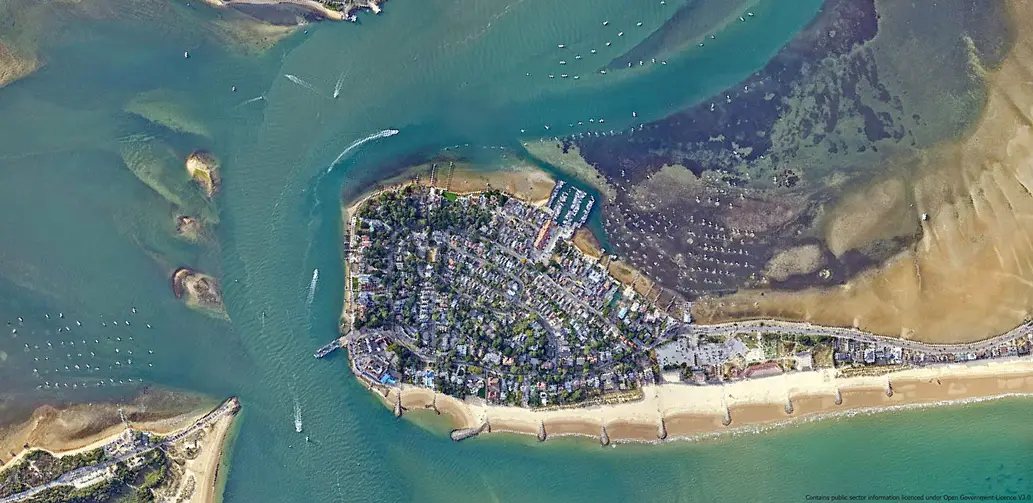
Aerial imagery of intertidal areas
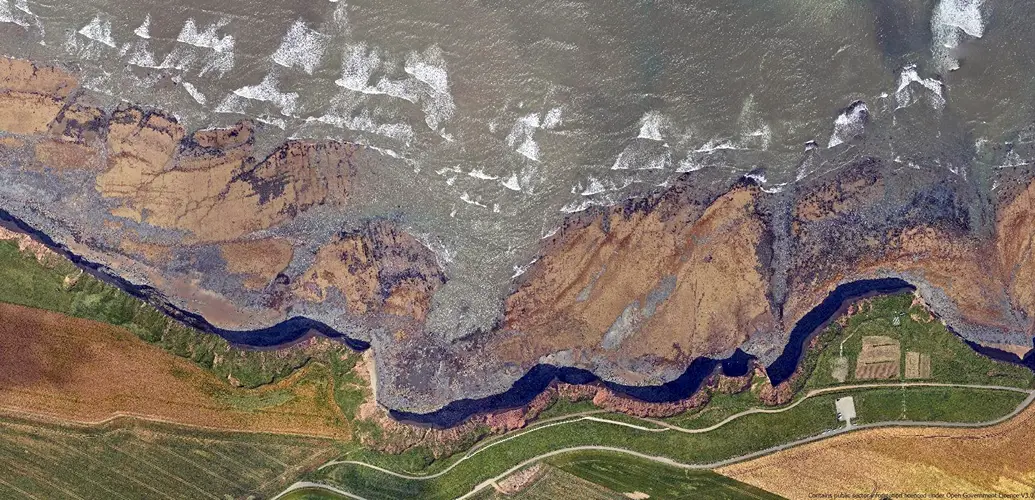
Aerial imagery of intertidal areas
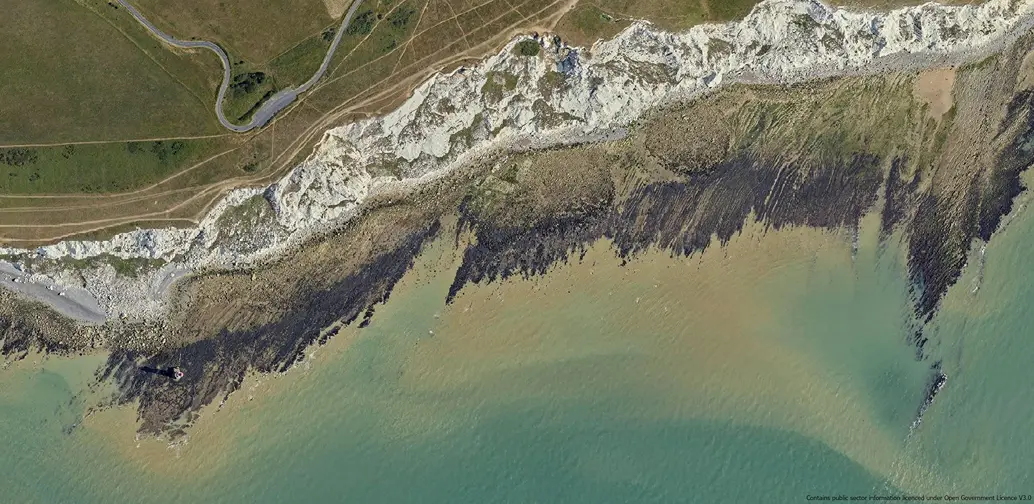
Aerial imagery of intertidal areas
The most cost-effective grid is the one that gets consented, built and accepted the first time
The UK’s challenge is not only to build more grid infrastructure quickly, but to build it sustainably.
APEM Group believes that progress will come from making smarter decisions earlier, supported by high‑resolution environmental and technical intelligence. This approach reduces risk, minimises redesign, and strengthens confidence among regulators and communities. It also underpins nature‑positive, resilient design and accelerates progress through critical development milestones, helping major projects move forward with greater certainty and efficiency.
APEM Group plays a critical role in enabling this smarter, data driven approach to grid development. Across major offshore wind, transmission and interconnector programmes, the organisation supports project teams throughout the full lifecycle, from early feasibility to post consent delivery.
Evidence-led delivery in practice
APEM Group has played a central role in managing consent compliance for a major cluster of offshore wind and transmission cable projects in the UK. Since 2018, the team has supported the development team across both offshore and onshore elements, ensuring regulatory alignment through the development of compliance programmes, reporting frameworks, and the negotiation of monitoring and mitigation plans with statutory bodies.
Responsibilities included coordinating survey contractors, preparing technical documentation, developing tender scopes, evaluating bids, and managing additional licence applications - all underpinned by a structured, evidence led approach that reduced risk and supported smooth progression through the consenting process.
NASH Maritime, part of APEM Group, has supported a series of complex subsea infrastructure projects including Equinor and BP’s Empire Wind 1, where the team assessed cable route options through busy New York Harbour using Carbon Trust aligned Cable Burial Risk Assessment methods and advanced modelling to optimise burial depths and reduce anchor strike risk. They also played a key role in the navigation risk assessment for the proposed 2 GW Spittal–Peterhead HVDC connection in Scotland, identifying shipping constraints early and informing viable routing options under Ofgem’s ASTI framework. For the ELMED interconnector between Italy and Tunisia, NASH delivered the Navigation Risk Assessment by combining detailed vessel traffic analysis, quantitative collision risk modelling and utilising information made available from Italian and Tunisian maritime authorities to define proportionate, defensible risk controls along the 200 km route.
Across the major projects we support, APEM Group’s approach is already proving its value. In one ongoing interconnector development, our teams are leading the full environmental assessment and consent coordination for a complex offshore to onshore transmission route. By integrating early high-resolution data, robust technical analysis and tightly managed stakeholder engagement, we have been able to de-risk critical decisions, refine route options with confidence, and maintain regulatory momentum in an increasingly congested planning landscape. This evidence led model, combining specialist expertise, multidisciplinary technical depth and proactive programme management, demonstrates how smarter data enables more predictable outcomes for even the most challenging grid infrastructure.
As the UK accelerates towards a cleaner, more connected energy future, the projects that succeed will be those grounded in early intelligence, transparent decision making and strong public trust, and APEM Group is committed to helping deliver exactly that.
Map showing cable design for an offshore wind project, bringing together various local environmental and spatial considerations