


Jubilee Easo, Ben Brown and Simon Davies - Eversheds Sutherland
09/04/2026 | Energy storage
Challenges and opportunities in green hydrogen and energy storage
The UK energy system is entering a decisive phase. As renewable generation continues to scale and electricity demand grows from transport, heat and industry, the challenge is no longer simply building low carbon capacity, but ensuring the system can operate securely, efficiently and at pace. Grid constraints, connection delays and the need for both short and long duration flexibility are now central to delivering a resilient, renewables led power system. Against this backdrop, technologies such as hydrogen and battery storage are increasingly being assessed not in isolation, but for the role they can play in supporting system readiness, balancing and flexibility across the UK grid.
Ahead of RenewableUK's Flexibility & Grid 2026, which Eversheds Sutherland is proud to be sponsoring and Simon Davies and Ben Brown will be speaking at, this article sheds light on the current state of the market for UK hydrogen and battery energy storage systems (BESS), and their role in creating a more resilient electricity system.
Flexibility & Grid
Hydrogen
We are watching a fascinating low-carbon hydrogen market as it matures in the UK, supported by the Government’s Hydrogen Production Business Model and Hydrogen Allocation Rounds (HARs). Hydrogen’s end-use applications are long-established, but in this evolving market participants are increasing their focus on hydrogen’s role as an enabler of electricity system readiness, resilience and flexibility.
In 2024, renewable energy sources generated just over 50% of the UK’s electricity, a figure which will climb significantly in the coming years. Electrolysers – used to produce hydrogen from water via electrolysis – can ramp up when renewable generation is abundant and ramp down when the grid is tight. Hydrogen therefore becomes a controllable, dispatchable demand source, which is something the electricity system currently lacks at scale. Also relevant to the picture are developments in hydrogen storage: salt caverns offer a relatively ready-made solution; more is being learned about the utilisation of depleted hydrocarbon fields for storage; and several new, large-scale transport and storage projects are in development in strategic parts of the country.
Hydrogen has the potential to provide a long-duration, high-capacity and flexible buffer without which a renewables-dominated grid cannot reliably operate. Accordingly, hydrogen is emerging as a key part of system readiness.
Unfortunately, the sector risks stalling. Common themes are emerging:
- Regulatory and policy delays, including to HAR 1 and HAR 2 awards, have resulted in reduced investor confidence, corporate strategy changes and skill loss across the sector. Multiple HAR 1 projects have been withdrawn and very few HAR 2 shortlisted projects have taken final investment decision (FID). Developers including Hynamics, RWE and Lhyfe all spoke at this year’s Hydrogen UK conference about the difficulties to production projects caused by regulatory delay. Predictability and regularity will be essential to a flourishing low-carbon hydrogen production market.
- Transport and storage projects are being developed on different timeframes to production projects – the Hydrogen Transport Business Model and Hydrogen Storage Business Model remain to be finalised – but will be similarly reliant on certainty around subsidies. We were excited to see National Gas, Equinor, Centrica and SSE combine for their proposed bid on the UK’s first hydrogen network, but that and other projects’ FIDs will be elusive without clarity from Government.
- On the offtaker side, demand remains unsteady given existing access to natural gas, necessary development costs and capital expenditure. The lack of transport and storage infrastructure is relevant to this too: tube trailers can present a practical solution but often prove to be too expensive to be a commercially attractive solution; and industry will be slow to commit to repurpose pipelines for hydrogen while reliance on natural gas remains heavy. The Government’s long-awaited Hydrogen Strategy update needs to focus on this tension and provide a clear pathway by which transport and storage infrastructure – new networks, repurposing of pipelines and new storage technologies – will help drive demand and production.
Coordinating hydrogen production, transport and storage with the needs of the energy system is an unenviable task, but is critical in order to realise the flexibility and stability opportunities presented by the production and storage of low-carbon hydrogen. All in the sector will be pleased that the Government has reiterated that its approach to hydrogen “has not changed” but industry is increasingly impatient and unconfident. Publication and implementation of the hydrogen business models and feedback from industry will be an essential part of strategic hydrogen network planning. With coherent policy design, strategic planning, and infrastructure investment, hydrogen can become a core pillar of the UK’s clean, secure and flexible energy system.
Battery energy storage systems (BESS)
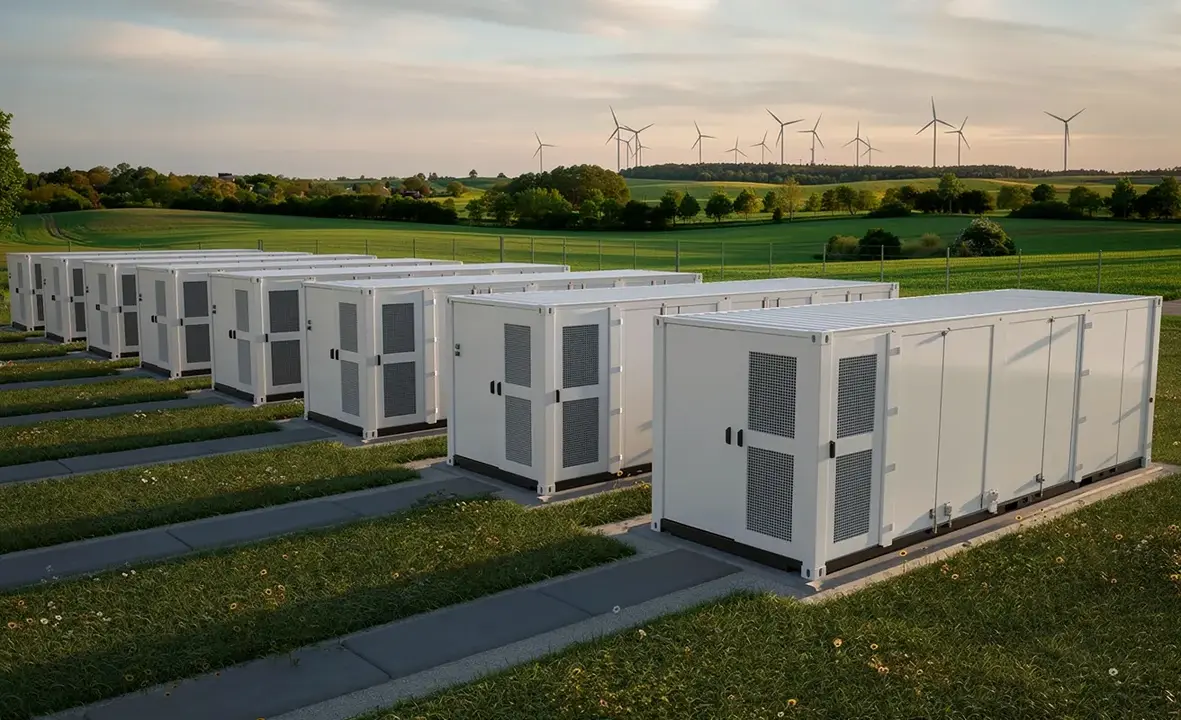
Turning to battery energy storage systems (BESS), we continue to see strong growth and investment appetite in the UK market. The UK's leading BESS sector is characterised by relatively well-developed and understood commercial and contracting structures (e.g. across optimisation, floors and tolls), multi-gigawatt yearly additions, larger average projects (in terms of capacity in MW and MWh), and a shift towards portfolios that mix two-to-four-hour lithium-ion systems with longer duration pathways. BESS capacity continues to expand rapidly, with over 4 GW of operational grid-scale battery storage, a figure that has more than doubled in the past two years. The pipeline remains robust, notwithstanding various market and regulatory headwinds, with projects at various stages of development, planning and construction. This continued growth reflects both the maturation of the technology, but more importantly the compelling fundamentals of the commercial case for flexible assets in a system characterised by intermittent renewable generation.
From a legal perspective, the revenue landscape for BESS projects has evolved and adapted considerably, as it has always had a tendency to do. We are seeing more hybrid sites and products – for example, projects splitting themselves into constituent parts (BMUs) with different contracting/revenue strategies (which together make up the “overall package”), or single project agreements that within them contain hybrid elements (e.g. partial tolls/floors). There are certain elements where the fundamentals remain relatively constant – e.g. the roles of and responsibility for capacity market or ancillary service revenues – but changes in law or policy signals, and market standards, continue to evolve and incrementally move the risk dial for both parties to any new revenue contract.
However, these challenges persist across the sector:
- Grid connection delays remain one of the most significant barriers to deployment. UK BESS developers should now be at the stage where they can be relatively confident whether they are “in” or “out” of connections reform (TMO4+), but many are still awaiting or digesting the critical final details of their Gate 2 offers to assess the impact.
- Supply chain constraints and planning considerations continue to affect project timelines. Battery cell and equipment availability remains subject to global demand pressures and geopolitical factors. Planning consents, particularly for larger sites, can be protracted, with visual impact, noise and safety considerations requiring careful management. Fire safety standards and protocols are receiving increased attention following several high-profile incidents internationally.
- Whilst this has always been a consideration, we are seeing increased focus on cyber security risk, with the Cyber Security and Resilience Bill in motion, and BESS developers/owners looking to ensure that they have sufficiently robust arrangements in place with their counterparties (both on optimisation and supply chain sides), or within their procurement strategies, to remain not only compliant but as future-proofed as possible.
On the positive side, financing structures are adapting to the merchant risk inherent in BESS projects. As energy storage has developed a clearer track record of performance, associated debt finance has become more widely available in the UK, although continuing to favour lithium-ion BESS projects. The move towards larger-scale, debt-financed projects has resulted in a surge of interest in contracted revenue contracts which give lenders certainty of returns. These typically include optimisation contracts with revenue floors or tolling contracts. Players are continuing to experiment with more novel structures, such as financial tolls, revenue swaps, insurance products, and hybrid products (e.g. partial tolls). We are seeing increased interest from infrastructure funds and institutional investors comfortable with the risk-return profile of operational assets, driving a secondary market for completed projects.
Looking ahead, the role of BESS in the UK energy system seem likely to only grow in importance. As variable renewable penetration increases and thermal/nuclear capacity continues to retire without replacement, the system's need for fast-acting flexibility will intensify. Longer-duration storage technologies, including flow batteries, compressed air and liquid air energy storage, are progressing towards commercial viability and may complement lithium-ion BESS for different applications; new pumped hydro has also been given a boost with the LDES scheme. The integration of BESS with electric vehicle charging infrastructure and demand-side response programmes presents further opportunities. With continued policy support, clearer connections processes and sustained investment, battery storage is positioned to be fundamental to delivering the flexible, resilient electricity system that the UK's net zero ambitions require.
Conclusion
Together, hydrogen and battery storage highlight both the scale of the UK’s flexibility challenge and the opportunity (and challenges) that come with addressing it in a coordinated way. As renewable penetration increases and thermal/nuclear capacity retires, the electricity system will rely ever more heavily on assets that can respond quickly, store energy across different time horizons and support grid stability. Realising this potential will depend on policy certainty, timely infrastructure delivery and alignment between system planning, grid access and enabling market frameworks and conditions. With coherent regulation and investment signals, flexibility technologies should continue to move to the core of the UK electricity system, enabling a secure, resilient and renewables led grid fit for the decades ahead.
We are looking forward to hearing from Simon Davies and Ben Brown speaking at Flexibility & Grid 2026 as they join discussions on hydrogen (session B3) and battery storage (session B4) respectively, sharing perspectives on how these technologies - which are central to flexibility and grid stability– can continue to be developed and utilised towards delivery of the UK’s future electricity system.
With experience across all aspects of major renewables and BESS portfolios, and hydrogen projects, at various stages of their lifecycles, our UK Energy team plays a direct role in unlocking capital, accelerating delivery and helping clients navigate the UK’s evolving regulatory and grid landscape to support the infrastructure needed for a flexible, renewables led energy system.
Published by:

Jubilee Easo
Co-Head of Global Energy, Eversheds Sutherland
Jubilee is a partner in the Corporate practice in our London office and is the co-head of our Global Energy Group. She also heads our international oil and gas practice and our hydrogen practice. For over 20 years, Jubilee has advised clients on a wide range of complex international acquisitions and divestments and project developments in the upstream, midstream and downstream natural gas and renewable gas sectors. Jubilee also has substantial experience advising energy clients on hydrogen, ammonia, and bio-fuels projects. Jubilee’s industry experience (gained in-house and in private practice) and ability to move between different technologies and sectors has been particularly valuable in helping clients unlock new strategic opportunities across the energy transition. Jubilee is recognised as a top tier energy lawyer by Chambers Global. As co-head of our Global Energy Group, Jubilee leads a team of over 400 lawyers who are committed to assisting our clients navigate the energy transition and achieve their net zero goals. The team have advised on 100GW of renewable and alternative energy projects across Europe, US and the UK, 50% of the largest solar farms in the UK and 12 of the 17 UK and European interconnector projects.
Published by:

Simon Davies
Partner, Eversheds Sutherland
Simon is a partner in the Global Energy Group specialising in complex commercial transactions and regulatory matters within the clean energy sector, including energy commodities, route to market and offtake arrangements, subsidies and grid connections. Simon is the IJ Global ESG Lawyer of the Year and is recognised by Legal 500 as a Next Generation Partner in Power and Renewables and a is a Legal500 UK Green Ambassador. Simon co-leads our EMEA PPA practice, which is consistently ranked by Inspiratia as a top 3 European legal practice by deal count and volume. Simon has led the negotiations in respect of over 4GW of clean power agreements within the last two years across EMEA, including large scale offshore wind, onshore wind and solar/battery storage and was the leading EMEA advisor in relation to the largest corporate PPA partnership in the world.
Published by:

Ben Brown
Partner, Eversheds Sutherland
Ben co-heads the UK energy regulatory practice, and is a market leader in the battery storage sector, having drafted and closed the ground-breaking Gresham House/Octopus tolling agreement, as well as the contracted revenue suite for the recently closed Gresham and Pulse BESS financings (totalling £460m). He has acted on the trading arrangements for some of the largest BESS developers in the UK (and Europe), and has drafted multiple first of a kind revenue stabilisation contracts for BESS, in the UK and in key European markets. His particular focus is on energy regulations, grid connections, PPAs and BESS trading/optimisation arrangements. His experience spans the full spectrum of asset classes and technologies including BESS, nuclear, wind, solar, interconnectors, geothermal, biomass, biofuels, hydrogen, CCGT, CHP, and speakers.