


Alex Atkinson, External Affairs and Stakeholder Engagement Coordinator, RenewableUK Cymru
10/12/2025 | Welsh

Turning 25 with offshore wind: the view from Wales
10 December 2025
25 years ago this week, the UK switched on its very first offshore wind farm off the coast of Blyth in north-east England.
It was a very different world back then: Google was only two years old, Vladimir Putin had just taken office in the Kremlin, and Pembrokeshire-born David Gray was finding global fame with his hit single 'Babylon'. Wikipedia was just around the corner, and the iPhone was still a glint in Apple’s eye. Or so I’m told – given the breakthrough at Blyth took place a month before I was born.
As offshore wind and I reach our respective 25th birthdays, I’m taking a moment to reflect on the story so far in Wales and look forward to how this technology is shaping up to power our future, delivering clean Welsh energy for decades to come.
When did offshore wind begin in Wales?
At the turn of the millennium, offshore wind was still the new kid on the block — innovative but unproven, and far from the economic heavyweight and reliable clean-power source it is today. The first two turbines off Blyth, producing just 4MW between them, were essentially an experiment to see whether offshore wind could work at all.
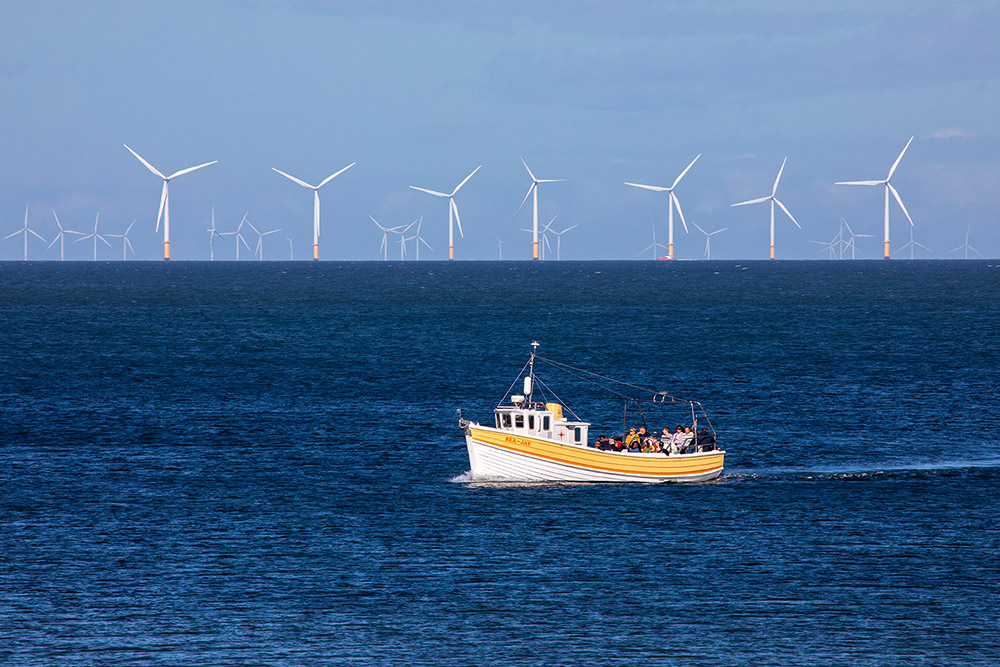
That’s why you could argue that the real take-off moment for offshore wind happened in North Wales. Just three years later, in 2003, North Hoyle off the coast from Rhyl became not only Wales’ first offshore wind farm but the UK’s first major offshore project. Jumping from two turbines to thirty, and from 4MW to 60MW, North Hoyle marked a dramatic step-change. It not only proved offshore wind could scale, but also paved the way for the industry we know today.
By 2009, offshore wind was rapidly becoming an industrial force, and one of our strongest tools in tackling climate change. That year, RWE’s Rhyl Flats wind farm came online five miles out from Llandudno. Delivering 90MW of clean electricity, enough to power around 70,000 homes, it marked another major leap forward, and has cut 1.7 million tonnes of carbon emissions over its lifetime. And the pace of growth continued. Just six years later, in 2015 off the same North Wales coast, Gwynt y Môr was commissioned. At 576MW and 160 turbines, it became one of the largest offshore wind farms in the world.
In the space of just 12 years, Wales had gone from the 60MW North Hoyle site to a project almost ten times larger. Offshore wind had leapfrogged from two pilot turbines in Blyth to one of Europe’s flagship clean energy assets in barely a decade and a half.
But here’s the stark reality: Gwynt y Môr was also the last offshore wind farm built in Wales. It’s now ten years since it was completed.
In other words, the last time Wales built offshore wind, I was still doing my GCSEs!
The great Celtic comeback
Wales’ offshore wind story isn’t over though, far from it. Two new offshore projects planned for North Wales are eligible to compete in this year’s Clean Power Auction, offering the chance to restart construction after almost a decade of pause.
But the real step change, the technology that will redefine the Welsh role in the UK energy system, is happening further south and west in the Celtic Sea. If North Wales was a trailblazer in fixed-bottom offshore wind, South and West Wales will now lead the UK’s floating offshore wind revolution: bigger, more powerful, and able to operate in deeper waters where traditional turbines can’t go. With The Crown Estate’s Leasing Round 5 in the Celtic Sea now complete, Wales is on the brink of hosting one of the most exciting renewables developments in the world.
Three sites have been secured by Equinor, Gwynt Glas, and Ocean Winds, which together are set to deliver:
- 4.5GW of clean power
- More than 5,000 jobs supported and a £1.4 billion boost to the UK economy.
- One of the largest floating offshore wind deployments anywhere on the planet.
Beyond that, the Crown Estate is progressing plans to deliver 12GW of floating offshore wind capacity in the Celtic Sea by 2035. For Wales, this represents a roaring comeback for offshore wind and a leap into a new era of industrial opportunity, jobs, innovation, and global leadership.
By the time I turn 50, Wales’ electricity demand is expected to double, and perhaps even treble, as transport, heating, and industry switch to clean power. Meeting that demand will require a transformation every bit as significant as the revolutions that shaped the country’s industrial past.
With 80% of the world’s offshore wind potential located in deeper waters, floating offshore wind will be critical to delivering the UK’s future energy needs. The Climate Change Committee estimates we will need 100GW of offshore wind by 2050. And, once again, Wales is positioned to lead.
But getting there depends on the choices we make now. Onshore wind is the runway to that success. It is the near-term opportunity that equips Welsh workers with the skills they need, readies Welsh businesses to grow capacity, and strengthens our ports and supply chain to prepare for the scale of floating offshore wind to come.
Just as Welsh coal powered the steam age, and Welsh steel built bridges, ships, and skylines across the world, we now have the chance to drive a new industrial revolution. In my lifetime offshore wind in Wales has grown from an emerging technology into one of the foundational economic growth areas of the 21st century.
And while David Gray is no longer topping the charts 25 years on, one thing hasn’t changed. Vladimir Putin is still very much in power and his invasion of Ukraine was a stark reminder that Wales' and the UK’s energy security can never again depend on volatile global fossil fuel markets. The case for home-grown, clean power has never been stronger.
What began with 60MW in North Hoyle has now reached 726MW of offshore capacity here in Wales. Over the next decade, that could rise to more than 5GW. As countries across the world race to adopt offshore wind, Wales will be remembered as one of the early pioneers - paving the way for current and future generations to enjoy a safer, more secure planet, running on clean, affordable energy.