


Sam Sheppard, Senior Communications and Campaigns Manager
31/03/2026 | Mythbusting

The energy price cap explained
31 March 2026
What is the UK energy price cap?
The UK energy price cap was introduced in 2019 as a means to protect billpayers on variable electricity and gas tariffs. It’s designed to ensure fair pricing and reflect the underlying cost of supplying energy, and it works by setting a limit on the maximum standing charges and unit rates that suppliers can charge households on default tariffs.
Set by Ofgem, the cap is updated every three months based on the costs suppliers face. These include the price of wholesale energy, network charges, policy costs, and operating expenses. Importantly, it is not a cap on your total bill. Your final bill will depend on how much energy you use.
How does it work?
The cap applies to standard variable tariffs (SVTs), as well as default tariffs, including customers who have not switched or whose fixed deal has ended. However, it does not apply to fixed-rate deals or business energy contracts.
The level of the cap is expressed as an annual bill for a ‘typical household’ using average levels of gas and electricity. This is based on average annual consumption figures, derived from national data and periodically reviewed to reflect changes in how households use energy. It is therefore best understood as a benchmark for comparison, rather than a guaranteed bill.
The cap itself limits the price per kilowatt-hour (kWh) of electricity and gas, as well as the daily standing charge, which is a fixed cost paid by a customer regardless of their usage. The standing charge covers the expense of maintaining and upgrading energy networks, metering infrastructure, billing systems, and policy and legacy costs.
Which costs go into the price cap?
The cap reflects the efficient cost of supplying energy, with the main components being:
- Wholesale energy costs, which is the cost of buying gas and electricity on the market. This is typically the largest part of the bill, currently accounting for around 40% of it, and can fluctuate significantly depending on global events and market forces.
- Policy costs, which cover Government social and environmental schemes funded through energy bills.
- Network costs, which are charges for using and maintaining the pipes and wires that transport electricity and gas to homes across the country.
- Operating costs, which represent a supplier’s costs for billing and metering, as well as providing customer service and systems.
- VAT, which is levied at 5% for households.
- Supplier margin, which is a small allowance to account for both profit and risk.
What are these policy costs?
One of the most important (and most frequently misunderstood) elements of the cap, policy costs fund programmes that support vulnerable households, improve energy efficiency, and help deliver decarbonisation. Within this, key schemes include:
- Warm Homes Discount, which is a rebate scheme providing eligible low-income households with a direct discount on their winter electricity bill.
- Energy Company Obligation (ECO), which requires larger suppliers to fund energy efficiency improvements in low-income and vulnerable households, such as insulation and heating upgrades.
- Renewables Obligation (RO), which is a legacy scheme supporting large-scale renewable electricity generation. Although it closed to new generating capacity in 2017, when it was replaced by the Contracts for Difference (CfD) scheme, the RO continues to support existing renewable projects. However, this is forecast to steeply decline in the near future, with a £1.8 billion reduction in 2027/28, as older wind and solar farms are retired from the scheme and the associated costs are removed from bills.
- Contracts for Difference (CfDs), which are 20-year contracts awarded via annual auctions between a low carbon electricity generator (e.g. a developer of a solar or wind farm) and the Government-owned Low Carbon Contracts Company (LCCC).
- Feed-in Tariffs, which support small-scale renewable generation such as rooftop solar.
- The Capacity Market, which ensures sufficient reliable electricity-generating capacity is available to maintain security of supply.
Together, these schemes represent a smaller proportion of bills than wholesale energy costs, whilst playing a vital role in supporting vulnerable consumers, improving the energy efficiency of UK homes, reducing emissions, and building long-term energy security.
In particular, mechanisms like the CfD have demonstrated how investment in renewables can help shield consumers from fossil fuel price volatility over time, as they provide stability whilst ensuring generators actually pay back into the system when wholesale prices are high.
Why are network costs rising?
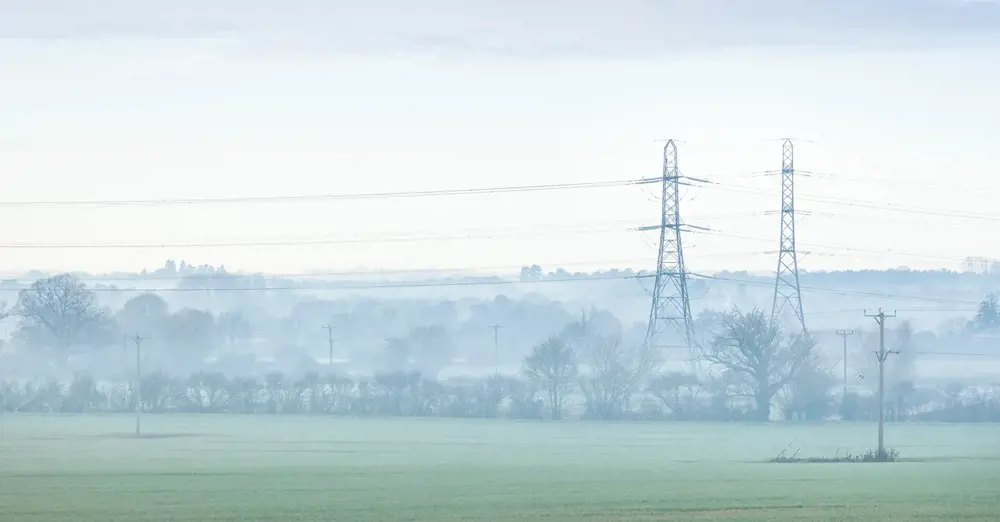
Network costs are a regulated part of an energy bill and are set by Ofgem under multi-year price control frameworks. These charges are paid to the companies that operate the transmission grid and local distribution networks and, in recent years, have increased for several structural reasons.
- Upgrading ageing infrastructure. As assets reach the end of their operational life, they require replacement or major refurbishment. Given much of the UK’s grid was built decades ago when the system was based around a small number of large fossil fuel power stations located near centres of demand, it now requires significant refurbishment.
- Connecting new renewable generation. The transition to net zero requires a very different system design. New offshore wind farms, onshore wind, and solar projects are often located far from major cities, which means new transmission lines, substations and reinforcement works are needed to move power from where it is generated to where it is used. Without new grid infrastructure, existing network generators may be asked to reduce (or curtail) their output to avoid overloading it, with alternative generation required to switch on elsewhere. This curtailment is done to maintain overall stability.
- Reinforcing local networks. The electrification of heat and transport, such as through the adoption of electric vehicles and domestic heat pumps, has increased demand on local distribution networks. As a result, cables and substations in some areas must be upgraded to handle higher peak loads.
- Reducing system constraints. At times when the grid lacks sufficient capacity, the flow of energy is constrained to avoid a scenario in which power surges and overwhelms it, which would result in damage to infrastructure, domestic and commercial appliances, and potentially blackouts. Strategic investment in grid reinforcement is required to reduce this over time.
- Building resilience and digital capability. Our modern energy system requires smarter monitoring, digitalisation and cybersecurity investment to manage a more decentralised and variable supply base.
Although these upgrades add to bills in the short term, they are essential to delivering a more secure, lower-carbon and ultimately more stable energy system in the long run. Network investment is regulated to ensure value for money, and reflects the scale of the infrastructure transformation underway across the country.
What is actually changing in April 2026?
From 1 April, the new price cap period (Q2 2026) will reflect updated wholesale prices, network costs and policy cost adjustments. The price cap update taking effect brings a mix of increases and decreases across the different charges that feed into household energy bills.
Overall, the headline cap is lower, but not every element moves in the same direction, which can help explain both short-term bill changes and longer-term trends. The key changes include:
- Updated wholesale energy allowances to reflect recent market movements.
- Adjustments to policy costs, including the funding profile of social and environmental schemes.
- Revised network cost allowances.
- Updated operating cost assumptions.
As confirmed by Ofgem and outlined by the Government, the cap continues to reflect the underlying cost of supplying energy, rather than any political targets. The total price cap for a typical dual-fuel (electricity and gas) household paying by Direct Debit will drop from around £1,758 per year to £1,641, a reduction of 7%. This means an average household could save around £10 per month compared with the previous quarter.
Within this, the gas unit price is falling slightly, reflecting lower wholesale prices and policy changes, whilst the electricity unit price is also decreasing by a more noticeable amount. The gas standing charge is also dropping slightly, although the electricity standing charge will see a modest rise.
Policy costs account for a larger shift, because the Government is removing or shifting the cost of some schemes (such as the ECO and much of the RO) off household bills and onto general taxation. This change alone will contribute around £150 in annual savings.
However, although many costs are falling, network costs will rise by around £66 per year, as a result of the aforementioned investment in upgrading and modernising the grid under the current price control framework, which will help to support the required transmission and distribution upgrades.
In conclusion
The energy price cap plays an important role in protecting consumers from excessive pricing, as well as providing transparency regarding what makes up an energy bill. Understanding what sits within one is crucial to informing the debate about energy prices, social policy, and the transition to a cleaner, more secure energy system.
But it also highlights the structural reality of the UK energy system, which is that wholesale gas prices remain the single biggest driver of bills. In the long term, increasing the share of low-cost renewable generation supported through mechanisms such as CfDs can help stabilise and reduce our exposure to volatile fossil fuel markets, whilst supporting net zero and boosting affordability for consumers.